Pages

Showing posts with label science. Show all posts

Tuesday, 7 December 2021

Making Hokey pokey

 Aim:

I want to find out how to make hokey pokey 

Research:

The hokey pokey dance

How to make hokey pokey


Method:


Equipment:

  • Sugar 
  • Baking soda 
  • golden syrup 
  • saucepan 
  • table spoon 
  • cookie cutter 
  • baking paper 
  • Bunsen burner 
  • Tripod 


Instructions: 

  1. Get all your equipment 
  2. wash your hands
  3. Set up the Bunsen burner 
  4. Put the pot on the tripod under the Bunsen burner 
  5. light the Bunsen burner (hole close)
  6. Add 5 table spoons of sugar to the pot
  7. Add 2 table spoons of golden syrup 
  8. Melt and mix
  9. Turn the gas off then add one table spoon of baking soda and mix
  10. Scrape the hokey pokey onto the baking paper 
  11. Let it cool down for at least 30 seconds 
  12. Press a cookie cutter into the hokey pokey 

Results: 


Discussion:


Tuesday, 30 November 2021

Making ginger beer

 Aim:

I want to find out how to brew ginger beer.


Research :

The first video is about what is alcohol and the science behind that. The second one if how to brew kombucha and all the step by step instructions and all about it. And the second one explains the science of fermentation.  

What is alcohol?

how to brew ginger beer

Science of fermentation


Method:

Equipment:

  • Ginger (sauce of sugar)
  • Warm water 
  • Yeast
  • cup
  • spoon


Instructions:
  1. wash your hands
  2. Get the equipment 
  3. put one table spoon of ginger in the cup
  4. half fill the cup with warm water
  5. add one teaspoon of yeast 
  6. Mix it all together 
  7. Leave it too ferment for a week.
  8. After one week, drink it.
Results:


It didn't smell very nice it smelt like old milk. The taste was quite bitter though.


Discussion:

What is fermentation?

It is chemical breakdown of a substance by bacteria( when yeasts, or other microorganisms breaks down sugar into alcohol.

what are the best conditions for brewing?

Normal ale fermentation temperatures range from 20 to 22 °C and lager fermentation temperatures from 7 to 13 °C. 


Thursday, 18 November 2021

Red cabbage indicator

 Aim: I want to find out how red cabbage can tell if a liquid is an acid or a base.


Research: 


Method:


Equipment: 

  • beaker
  • warm water
  • red cabbage 
  • test tubes 
  • Acid(hydrochloric acid)
  • Base (sodium hydroxide)
  • dropper 


instructions:

  1. wash your hands
  2. get all your equipment 
  3. put warm water into your beaker about half way
  4. cut your red cabbage and put it in your beaker 
  5. Let it soak all the colouring in while stirring it.
  6. with your dropper put some of the cabbage water into each test tube and then experiment and try to make different colours with the acid and base.
Results:


Discussion: 

What is an acid and a base?
An acid is any hydrogen-containing substance that is capable of donating a proton (hydrogen ion) to another substance.  A base is a molecule or ion able to accept a hydrogen ion from an acid.

what do chemical indicators do?
chemical indicator, any substance that gives a visible sign, usually by a colour change, of the presence or absence of a threshold concentration of a chemical species, such as an acid or an alkali in a solution. ... The common application of indicators is the detection of end points of titrations.


Thursday, 11 November 2021

Making sherbet

 Aim: I want to find out how to make sherbet 


Research:


Method:

Equipment:
  • Popsicle stick or spoon
  • Citric acid 
  • Raro 
  • baking soda 
  • paper or plate 


Instructions:  
  1. Get your equipment 
  2. wash your hands 
  3. put your paper or plate on the table 
  4. get a pile of your 3 powers on the plate  
  5. using your Popsicle stick mix some of each powder together 
  6. taste the sherbet 
  7. if there if too much baking soda add more citric acid 
  8. if there is too much citric acid add more baking soda 
  9. And to make it taste better add more Raro if theres too much of the other powders


Results: 

The first time i tried making it it tasted very bitter but after a couple of trys I got it right.


Discussion:


Why did the sherbet not foam on the paper but did in you mouth?

Because it needs liquid to foam and when its in your mouth it foams because of your saliva. 


What was the chemical reaction in the sherbet?

The fizzing sensation experienced when eating sherbet is a result of the chemical reaction between the citric acid and the sodium bicarbonate. The reaction also produces small bubbles of carbon dioxide but only when the dry ingredients are wet by saliva in the mouth.


What type of chemical reaction is this?

Neutralization 


Tuesday, 2 November 2021

Blind taste testing

Aim: 
I want to find out if food tastes differently when you cant see or smell and don't know what it is. 


How do we taste


Eating something disgusting blindfolded 


 Method:

Equipment:
  • blind fold  
  • mystery food
  • Popsicle stick 
  • someone to feed you food

Instructions:
  1. wash your hands
  2. get all your equipment 
  3. put your blind fold
  4. block your nose (So you cant smell/taste)
  5. put your hand out 
  6. eat it and try to guess what it is
  7. un block your nose and see what it is
Results: 

unknown foodfirst tasteLast tasteFood guess
SugarNASweetSugar
saltNASaltySalt
Baking powderNABitterbaking soda
citric AcidNAsourcitric acid
PickleSaltySalty and bitter
olive first then pickle
potatocouldn't taste itkinda bitterDidn't know
Applekinda sweetsweet and fruityApple
pearbitter sweet softsweet fruity
i didnt know what is was called
marshmallowHard kinda sweetsweetmarshmallow
Burger ringkinda bitterMeatyburger ring
sour lolliesoursour sweetsour lollie

Discussion: 

How do you taste food? our taste buds pick up clues about how a food tastes and sends messages about it to your brain along with wires called nerves. To taste something properly, you need to chew food into small pieces and to have a lot of drool, or saliva. This help the flavour molecules (also known as “tastants”) reach your taste buds.

What are the different tastes? Sweet, sour,bitter,salty and a new one savoury

does smell affect your taste? Our sense of smell in responsible for about 90% of what we taste. Without our sense of smell, our sense of taste is limited to only five distinct sensations: sweet, salty, sour, bitter and the newly discovered “umami” or savory sensation. All other flavours that we experience come from smell.


Thursday, 28 October 2021

Eating hot chilli

 Aim:

I want to find out how to get rid of burning chilli off my tongue.

Research:

Find a funny video of eating chilli


Find a video about the science of chilli


Method:

Equipment
  • Coke
  • Chilli
  • Popsicle
  • Water
  • Coca-cola
  • Timer
  • Cup

Instructions

  1. Get your equipment.
  2. Scoop some chilli onto your stick.
  3. start your timer and eat the chilli.
  4. stop the timer after 4 minutes.
  5. Rate how hot you mouth is.
  6. do experiment again but drink water after 2 minutes drink water.
  7. do the experiment again but drink coca-cola.
  8. drink milk


Results:  (4 minutes each)

The first chilli i did was without water and i am scoring it a 10/10 for burning.

the second time, i did was with water and i am scoring it a 8/10

the third time i did was with coco cola and i'm scoring it a 9/10 (but i thinks its because i did more)

The last time i did it was with milk and i'm scoring it a 5/10

Discussion: 

Why does chilli burn your mouth? 

it contains an alkaline, oil-based molecule called capsaicin, which sneakily triggers the temperature-sensitive pain receptors in your mouth/taste buds 

why does the milk reduce the burn? 

it helps your mouth handle capsaicin, Capsaicin binds to a receptor in the tongue and creates a burning sensation. ... Since capsaicin is fat-soluble, rinsing with milk fat helps ease the burn

Thursday, 21 October 2021

Gummy bear Osmosis

 Aim:

 I want to find out what happens to gummy bears when left in liquids. 

Method: 

Equipment:

  • Gummy bears 
  • Liquids - Water,salt water,sugar water (Sodium Chloride) (Glucose)
  • Electronic Scale 
  • 4x Petri dishes
  • marker pen 
Red:dry 2.43
Yellow:Sugar 2.19

Instructions: 

  • Get all of your equipment ready 
  • write your name the condition on the petri dish.
  • weigh the gummy bear and write it down on the petri dish
  • put the liquid in the petri dish.`
  • Then leave for 24 hours 

Tuesday, 19 October 2021

Bacteria around our school

 Aim: 

I want to find out what types of bacteria are around our school.


Research:  


Method: 

Equipment:
  • Cue tips /cotton buds
  • Agar plates 
  • marker pen
  • tape 

Instructions:
  1. Get out equipment 
  2. Wash your hands 
  3. Use a marker pen to write your name and location on the lid
  4. Wet the cue tip and swab the surface 
  5. Gently swab the agar plate with the cue tip
  6. Tape around the edges of the agar plate 
  7. Put the agar plate in a incubator over night 
  8. observe the plate the next day
Results-
I wasnt there that day that we looked at the results but here are some photos of some of them.
.


Wednesday, 7 July 2021

measuring mentos and coke

 Aim: I want to find out how many bubbles are made when mentos is dropped in coke.

Method: 

Equipment:

  • Coke ,coke No sugar,Sprite 
  • Mentos 
  • Measuring Cylinder (100ml and 10ml )
  • safety glasses  
  • Detergent 
  • Small beaker 

Instructions:
  1. Get all of your equipment ready 
  2. Put on your safety glasses 
  3.  poor 20ml of coke into the 100ml measuring cylinder 
  4. add 5ml of detergent to the coke in the 100ml cylinder
  5. then add the mentos and watch the magic happen   

Result: 

Height of the bubbles CokeCoke zeroSprite
38ML45ML73ML

In Conclusion I found out The sprite fizzed up the most out of all of them which surprised me since i thought that it wouldn't go as well.

Tuesday, 29 June 2021

Milk Plastic (Caesin)

Aim: I want to find out how to turn milk into plastic. 


Method: 


Equipment:
  • Stove,Oven or microwave 
  • Measuring cup 
  • measuring spoon
  • Milk 1 cup 
  • pot or microwavable container
  • white vinegar
  • paper towels 
  •  spoon
  • mug 
  • (Optional)food colouring glitter cookie cutters 

Instructions:  
  1. Get everything out and ready 
  2. Pour 1 cup of milk in the pot or microwaveable container. 
  3. Heat the milk in the microwave or the stove until its steaming.
  4. Add 4 teaspoons of white vinegar into a mug. 
  5. Add the hot milk to the mug with the white vinegar.
  6. Stir the mixture with a spoon. 
  7. Stack 4 layers of paper towels on a surface that is safe to get damp 
  8. scoop out the curds with a spoon and place them on the paper towels.
  9. fold the paper towels over the curds and press down to absorb excess liquid.
  10. colour shape or mold the dough as you like.
  11. put all your creations on a paper towel and let them dry overnight 


What is Caesin and what is it used for?

Casein is a slow-digesting dairy protein that people often take as a supplement. It releases amino acids slowly, so people often take it before bed to help with recovery and reduce muscle breakdown while they sleep. Several studies have shown it helps boost muscle growth, along with a ton of other benefits.


Wednesday, 23 June 2021

Edible slime

 Aim :I want to find out how to make edible slime 


Method:


Equipment:
  • Marshmallows
  • cup
  • Popsical stick   
  • Icing sugar 
  • Microwave 
  • oil (Optional)

  1. Get everything ready
  2. Wash your hands 
  3. put your marshmallows into your cup
  4. Melt your Marshmallows in the microwave and a little bit of oil(Optional) for 10 seconds
  5. Put in some Icing sugar and mix it until it is the constancy you want. (make sure not to touch it if its still hot)
  6. And then your done


Results: 

It felt kind of stiff but it was also Sticking and it was still sticking to my hands. I my slime was ductile. So I stretched it quite long but i think I could have still stretched it more.


Tuesday, 22 June 2021

Skittle colours

 Aim: I want to find out what happens when you put skittles in water 


Method:


equipment:

  • Petri dish 
  • Skittles
  • warm water 
  • small beaker

Instruction:
  1. Get all your equipment ready.
  2. spread out the skittles around the edge of your petri dish
  3. gently poor the warm water into the middle of the petri dish
  4. Observe what happens

Results:


discussion: 

why did the colour leave the skittles? 
Because Skittles are coated in food colouring and sugar and when you pour water over the skittles the coloured coat dissolves spreading through the water and making a cool pattern. 

Why did the colours not mix?

Because The warm water causes the colouring and sugar to dissolve and diffuse through the water. The reason the colours do not initially mix is due to water sheet thickness in colours..

Tuesday, 1 June 2021

Scientific Equipment

Beaker:
   
A beaker is for carrying liquids. 


Bunsen burner:

A bunsen burner is used for heating stuff up 


Gauze mat:
A gauze mat is used for putting under something thats hot to not burn anything 

Funnel: 
A funnel is used for putting large amounts of something in something small and making it easier to move.

Test tube:

A test tube is used for holding chemicals in it

Conical flask :
A conical flask is used for mixing things.


Spatula :

A spatula is used for allowing you to collect very small quantities of the chemical at a time.


Measuring cylinder:

A measuring cylinder used to measure the volume of liquids 

Scissor tongs:


tripod:
Is used for supporting flasks and beakers


evaporating basin:
Is used for evaporating liquids.


test tube tongs :
Is used for Holding a test tube


thermometer:

Used for measuring temperatures. 

Retort Stand:

is a piece of scientific equipment intended to support other pieces of equipment and glassware 

boss head:

Boss head is used to keep the clamp in place so if you put a glass holder in between the clamp it doesn't fall/break.

clamp :

 It is used to hold round laboratory glassware, such as a beaker, and flasks, etc.

burette :
To add Persist amounts of liquid. 

pipette:
pipette is a laboratory instrument used to measure out or transfer small quantities of liquid

volumetric flask :
Is used to contain a precise volume at a certain temperature.


Fume cupboard:
Fume cupboards are used widely in laboratories and are designed to capture and remove air-borne hazardous substances generated during laboratory experiments 

Scalpel:
To cut things in science. 


Wednesday, 26 May 2021

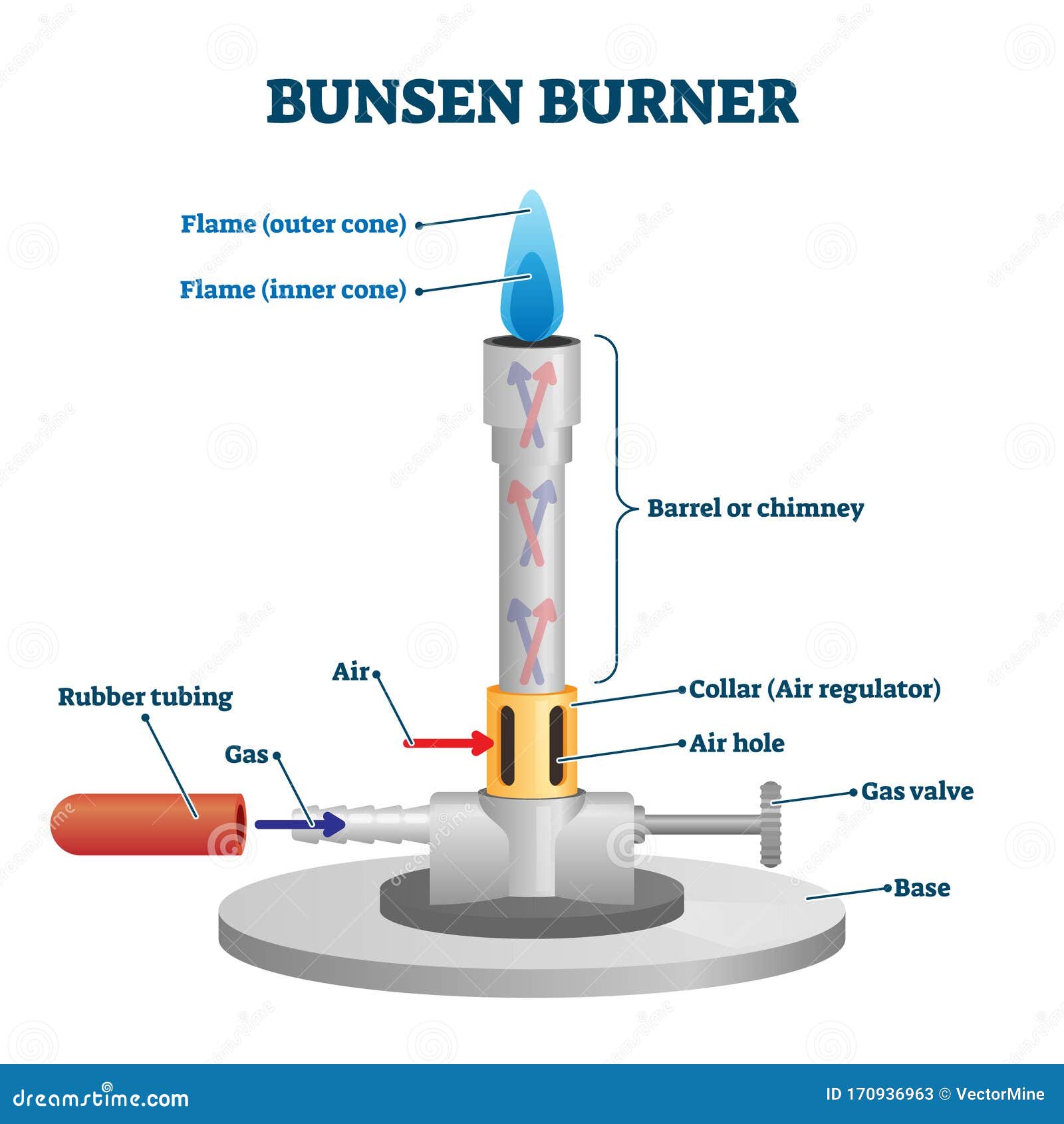
How to light a Bunsen burner

Aim: 

I want to find out how safely  to use Bunsen burner.

Method:
Bunsen Burner Lab Equipment Diagram Stock Vector - Illustration of diagram,  chemistry: 170936963

Equipment:
  • lighter/Matches 
  • Heat mat 
  • Bunsen burner 
  • Safety glasses


Instructions: 
  1. Get all the equipment ready and put on your safety glasses 
  2. Connect the Bunsen hose to the gas tap 
  3. turn the collar to close the air hole
  4. Make sure to put the heat mat under the Bunsen burner. 
  5. light you match or lighter out it over the Bunsen burner not twisting or learning over the Bunsen burner then turn the gas on 
  6. if your not using it turn the gas off

Results: 


Wednesday, 19 May 2021

Hands on fire

Aim:

I want to find out how to set my self on fire while being safe.

Method:

Equipment:  
  • large container of water
  • detergent (liquid soap) 
  • Hose 
  • Gas
  • lighter 

instructions:
  1. Get all of the equipment and lay it out
  2.  fill the Large container full of 2 centimetres f of water 
  3. Put some Liquid soap into the water and gently mix it around
  4. Connect the hose to the gas tap
  5. turn on the gas and bubble it into the water 
  6. tye any long hair up
  7. Roll up your sleeves of take off jacket past your elbows 
  8. Wet your hands and arms with water
  9. with 2 hands scoop the bubbles but not the water 
  10. take 2 steps forward   
  11. to get rid of the fire put your to hands out like your giving a high five


Result:

Saw: I saw the fire emerge up into a fire ball heating up each second 
smelt: I smelt burning gas when The fire Went up into the air
 felt: I felt kinda scared to do it at first.. i felt the heat burning up in my hands
heard: I heard the fire burning up into the air


Wednesday, 5 May 2021

Safety in the Lab

Rules:


1. You must follow the instructions given by the teacher 
2. You must not enter the lab without super vision(the teacher)
3. Report any breakages. 
4. Shoes must be worn at all times 
5. Do not or drink in the lab.
6. If you spill something tell the teacher then clean it up.
7. wash your hands after touching doing experimenting.
8. A heat proof should always be used when heating.
9. If in doubt , ask the teacher 
10. Never taste or smell chemicals. 

______________________________________________

1. Liquids do not go into the bins, because they go in the sink. 
2. Solids do not go down the sink because it can block the sink 
3. Wear safety glasses when you do experiments,
because you want to protect your eyes.
4. Put your chair under the desk, and stand at the bench
when you do experiments, because you can trip over them.
5. Bags do not go on the desks, because you can spill chemicals on your bag.
6. Long hair should be tied back, because it can catch on fire 
7. Do not smell the chemicals, because you can pass out and you don't know what you will hit when you pass out.
8. Walk, don’t run around the room, because you can fall over and break something or hurt yourself.
9. Do not eat or drink in the lab, because you can get sick from getting chemicals on your hands.

Wednesday, 12 August 2020

Navigation

 Aim:

 I want to walk in a straight line with no Seances.  


NO CHEATING :p


Hypothesis:

 I predict that I will fail because I don't think I will be able to walk in a straight line because I cant bearley walk in a straight line with my scenes   


Method : 

Equipment:

* Bucket 

* Blind fold/mask

 * Air plugs / cotton wool. 


Instructions: 

1. Grab your blind fold cover your eyes and tie it up so It stays on your head/ eyes.

2. Put some cotton wool in your ears

3. Grab your bucket over your head . 

4. Spin around 3 times.

5. Then yours partner needs to line you up  in the direction you want them to walk in.

6. Begin to attempt to walk in a straight line. 


Safety :

1. Stop walking when you hear the whistles ....         

2. if your partner says stop STOP.

3. Do not walk into objects, trees, Buildings or people.


Results: